
How a Marketing Audit Can Increase Your ROI
Most marketing budgets don’t fail because the strategy was wrong from the start. They fail because nobody went back to check what was actually working. Campaigns keep running on autopilot, old landing pages stay live, and small tracking errors quietly pile up until nobody can say with confidence where the marketing budget is really going.
This is exactly where a marketing audit earns its place. Understanding how a marketing audit can increase your ROI starts with recognizing that most businesses aren’t short on data — they’re short on someone reviewing that data honestly. At Digilites Studio, this is often the first step before any new campaign work begins, because improving results usually starts with understanding what’s already happening.
This article walks through what a marketing audit actually involves, the signs a business needs one, and how each piece — from Google Ads to website performance — connects back to the final ROI number that matters most.
Table of Contents
- What Is a Marketing Audit?
- Why Every Business Needs a Marketing Audit
- Signs Your Marketing Strategy Needs an Audit
- Components of a Complete Marketing Audit
- Measuring Marketing ROI
- Common Marketing Audit Mistakes
- Best Practices
- Marketing Audit Checklist
- Real Business Example
- Future Marketing Audit Trends
- Frequently Asked Questions
What Is a Marketing Audit?
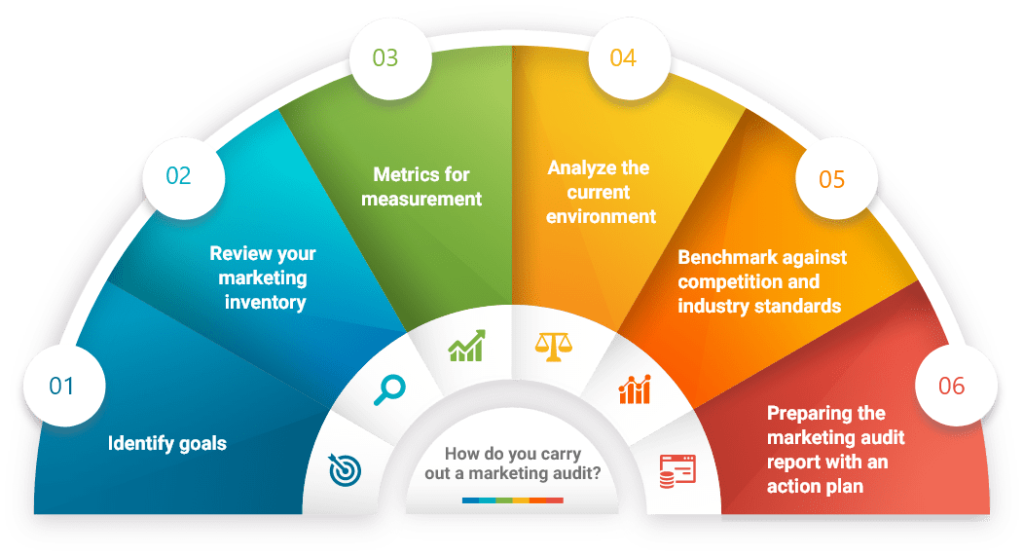
A marketing audit is a structured review of everything a business is currently doing across advertising, website, SEO, content, and analytics. It examines what’s working, what’s wasting budget, and what’s been left unchecked for too long.
Unlike a one-off campaign report, a proper audit looks across channels together. A Google Ads account might look efficient in isolation, but a marketing audit checks whether that traffic is actually converting once it reaches the website, and whether the numbers reported in the ad platform match what’s showing up in analytics and revenue.
Why Every Business Needs a Marketing Audit
Marketing budgets rarely get smaller reviews as they grow. A startup running one ad campaign can track results in a simple spreadsheet. A business running Google Ads, Meta Ads, SEO, and email at the same time usually can’t, and that’s where inefficiencies start hiding.
A marketing audit matters for a few clear reasons:
- It reveals where budget is being wasted on underperforming channels.
- It uncovers tracking gaps that distort real ROI numbers.
- It gives business owners and CEOs an honest, third-party view instead of relying only on internal reporting.
For SMEs and ecommerce brands working with tighter margins, this kind of clarity often makes the difference between a marketing budget that grows the business and one that simply keeps it afloat.
CTA: If it’s been more than six months since your last full marketing review, a marketing audit from Digilites Studio can show exactly where budget is working and where it isn’t.
Signs Your Marketing Strategy Needs an Audit
A few warning signs tend to show up before a business realizes an audit is overdue:
- Ad costs are rising, but sales or leads aren’t growing at the same rate.
- Website traffic looks healthy, but conversion rates keep dropping.
- Nobody on the team can confidently explain which channel drives the most revenue.
- Campaigns haven’t been restructured or tested in over six months.
- Reported numbers from Google Ads, Meta Ads, and Google Analytics don’t seem to match up.
Any one of these on its own might not be alarming. Several appearing together is usually a sign that a proper marketing audit is due.
Components of a Complete Marketing Audit
A thorough marketing audit doesn’t focus on just one channel. It moves through each part of the marketing system to see how they connect.
Website Performance Audit
This looks at page load speed, mobile responsiveness, and overall site structure. A slow or confusing website can undo the value of even the best-performing ad campaign.
SEO Audit
An SEO audit reviews keyword rankings, technical issues, backlink quality, and on-page optimization, identifying where organic visibility is being missed or where old content is quietly losing rankings.
Google Ads Audit
A Google Ads audit examines account structure, keyword match types, wasted spend on irrelevant search terms, and whether conversion tracking is set up correctly at the campaign and keyword level.
Meta Ads Audit
A Meta Ads audit reviews audience targeting, creative fatigue, campaign structure, and whether retargeting is being used effectively across Facebook and Instagram.
Social Media Audit
This checks posting consistency, engagement quality, and whether organic content is aligned with paid campaigns, rather than working in isolation.
Email Marketing Audit
An email audit looks at list segmentation, open rates, and whether automated sequences are actually nurturing leads or just sitting unused.
Competitor Analysis
Reviewing what competitors are doing across ads, SEO, and content helps identify gaps and opportunities a business may be missing entirely.
Customer Journey Review
This maps out the path a customer takes from first ad click to final purchase, highlighting where drop-offs happen along the way.
Analytics & Tracking Review
This is often the most revealing part of an audit. If Google Analytics, ad platforms, and CRM data aren’t properly connected, every ROI calculation built on top of them will be inaccurate.
Conversion Funnel Audit
A funnel audit examines each step between landing page visit and completed action, identifying exactly where potential customers are dropping off.
Brand Positioning Audit
This reviews how consistently a brand’s messaging, tone, and visuals show up across ads, website, and social channels.
Content Performance Audit
This looks at which blog posts, videos, or resources are actually driving traffic and leads, versus content that’s simply taking up space.
Marketing Budget Review
A budget review compares spend across channels against actual results, often revealing that a channel receiving the most attention isn’t the one generating the most revenue.
CTA: Reviewing every one of these areas on your own can take weeks. Digilites Studio’s marketing audit process covers all of them in a single, structured engagement.
Measuring Marketing ROI
Once an audit is complete, the real value comes from connecting findings back to marketing ROI. This typically involves reviewing:
- Return on ad spend (ROAS) across Google Ads and Meta Ads
- Customer acquisition cost (CAC) compared against customer lifetime value
- Cost per lead for businesses focused on lead generation
- Conversion rate at each stage of the funnel
A marketing audit doesn’t just report these numbers. It explains why they look the way they do, and which specific changes — a landing page redesign, a restructured ad account, or better audience segmentation — are likely to move them in the right direction.
Common Marketing Audit Mistakes
Even well-intentioned audits go wrong in a few predictable ways:
- Reviewing one channel in isolation instead of the full customer journey.
- Relying only on platform-reported numbers without checking against actual revenue.
- Treating the audit as a one-time exercise instead of a recurring check-in.
- Focusing only on cost-cutting instead of identifying where to invest more.
- Skipping a review of the website and landing pages entirely, and looking only at ad accounts.
Best Practices
- Run a full marketing audit at least twice a year, or whenever performance shifts noticeably.
- Involve someone outside the day-to-day campaign management for a more objective view.
- Cross-check ad platform numbers against Google Analytics and CRM data.
- Prioritize fixes based on potential ROI impact, not just ease of implementation.
- Document findings clearly so the next audit can measure progress against this one.
- Treat the audit as a starting point for strategy, not just a report to file away.
Marketing Audit Checklist
A simplified version of what a complete audit should cover:
- Website speed and mobile usability
- SEO rankings and technical health
- Google Ads account structure and wasted spend
- Meta Ads targeting and creative performance
- Social media consistency and engagement
- Email marketing automation and list health
- Competitor positioning
- Customer journey and funnel drop-off points
- Analytics and CRM tracking accuracy
- Budget allocation versus actual channel performance
Real Business Example
A B2B software company in the United States was spending steadily on Google Ads and LinkedIn Ads, with leads coming in consistently. On the surface, the marketing budget looked justified.
A full marketing audit revealed that nearly 30% of ad spend was going toward broad match keywords that rarely converted, and that the CRM wasn’t properly connected to ad platforms, meaning sales team feedback on lead quality never made it back into campaign decisions.
After restructuring keyword targeting, tightening audience segments on LinkedIn, and connecting the CRM to close the reporting loop, the company reduced wasted spend significantly and redirected that budget toward the segments actually producing paying customers. The audit didn’t change the overall budget. It changed where that budget was going, which is often the real driver of improved ROI.
India vs USA vs Canada: Regional Considerations
India Lower cost per click often masks inefficiencies, since businesses may not notice wasted spend as quickly when ad costs are already low. Regional and language targeting also needs separate review during an audit.
United States Higher competition means small tracking gaps have a bigger financial impact, making regular audits especially valuable for businesses running multiple paid channels at once.
Canada Privacy regulations affecting cookie-based tracking make the analytics and tracking review portion of an audit particularly important, since inaccurate data can quietly distort ROI reporting.
Future Marketing Audit Trends
Marketing audits are increasingly incorporating first-party data review, given the ongoing decline of third-party cookie tracking. Attribution modeling is shifting toward multi-touch approaches, meaning audits now need to assess how well a business’s tracking setup supports that shift.
There’s also a growing focus on connecting marketing audits directly to CRM and sales data, rather than stopping at ad platform metrics, giving business owners a truer sense of revenue impact rather than just campaign-level performance.
CTA: Staying ahead of these tracking changes takes ongoing attention. Digilites Studio’s marketing strategy team factors these shifts into every audit, so recommendations hold up as platforms continue to change.
Conclusion
A marketing audit isn’t about finding fault with past decisions. It’s about creating an honest starting point for better ones. Businesses that treat audits as a regular part of their marketing process, rather than a one-time fix, consistently make more confident decisions about where budget should go next.
Whether the goal is reducing wasted ad spend, improving conversion rates, or simply understanding where marketing ROI is really coming from, a structured audit is often the fastest way to get there.
Final CTA: If your marketing results have plateaued or your team isn’t sure where budget is actually working, Digilites Studio offers a complete marketing audit covering Google Ads, Meta Ads, SEO, website performance, and conversion tracking. Reach out to start with a clear, honest review of where things stand today.
4. FAQs
1. What is included in a marketing audit? A complete marketing audit typically covers website performance, SEO, Google Ads, Meta Ads, social media, email marketing, analytics tracking, and overall budget allocation.
2. How often should a business run a marketing audit? Most businesses benefit from a full audit at least twice a year, or sooner if ad costs rise without a matching increase in results.
3. Can a marketing audit help reduce ad spend? Yes. Audits often identify wasted spend on underperforming keywords, audiences, or channels, allowing budget to be redirected toward better-performing areas without necessarily increasing overall spend.
4. Does a marketing audit include the website, or just ad accounts? A complete audit includes the website and conversion funnel, since ad performance alone doesn’t reflect what happens once a visitor lands on the site.
5. How long does a marketing audit take? Timelines vary based on the number of channels involved, but a thorough audit typically takes one to three weeks to complete properly.
6. What’s the difference between a marketing audit and a Google Ads audit? A Google Ads audit focuses only on the ad account, while a marketing audit reviews all channels together, including SEO, website, and analytics, to see how they connect.
7. Can a small business benefit from a marketing audit? Yes. Smaller businesses often see a bigger relative improvement, since even modest budget reallocation can noticeably shift results at that scale.
8. What happens after a marketing audit is completed? A good audit ends with a prioritized action plan, showing which changes are likely to have the biggest impact on ROI first.
9. Does a marketing audit guarantee improved ROI? No responsible audit can guarantee specific results, but it provides the data and recommendations needed to make more informed, ROI-focused decisions.
10. Who should be involved in reviewing a marketing audit? Ideally, business owners, marketing managers, and whoever manages ad accounts should review the findings together, since budget and strategy decisions often span multiple roles.